
Panic Attacks & Panic Disorder
When fear seems to come out of nowhere.
A panic attack can be frightening—especially when you don't understand what is happening.
Your heart may suddenly begin racing. Your chest may feel tight. You might feel dizzy, shaky, short of breath, or disconnected from your surroundings. Some people become convinced they're having a heart attack, losing control, or that something terrible is about to happen.
And after you've experienced one panic attack, another problem can begin: worrying about when the next one will happen.
Panic attacks are treatable. Therapy can help you understand what is happening in your mind and body, reduce the fear surrounding these sensations, and begin breaking the cycle that allows panic to take control of your life.
What Does a Panic Attack Feel Like?
Panic attacks are sudden episodes of intense fear or discomfort that can produce powerful physical and emotional sensations. They can occur during stressful situations, but they can also seem to happen without an obvious trigger.
Because the symptoms can be so physical, people experiencing their first panic attack may believe they are experiencing a serious medical emergency.
Physical Symptoms of a Panic Attack
During a panic attack, you may experience:
A racing, pounding, or unusually noticeable heartbeat
Chest pain, pressure, or tightness
Shortness of breath or the feeling that you can't get enough air
Rapid breathing or hyperventilation
Dizziness, lightheadedness, or feeling faint
Shaking or trembling
Sweating
Chills or sudden feelings of heat
Nausea or stomach discomfort
Tingling or numbness, particularly in the hands, feet, or face
A feeling of choking or tightness in the throat
These sensations can become frightening very quickly, particularly when you don't know what is causing them.
What Panic Can Feel Like Mentally
The emotional experience of panic can be just as intense as the physical symptoms.
You may experience:
An overwhelming feeling that something terrible is happening
Fear that you're having a heart attack or other medical emergency
Fear of fainting
Fear that you're losing control
Fear that you're "going crazy"
A strong urge to escape wherever you are
Feeling detached from yourself
Feeling as though your surroundings aren't completely real
Fear that you might die
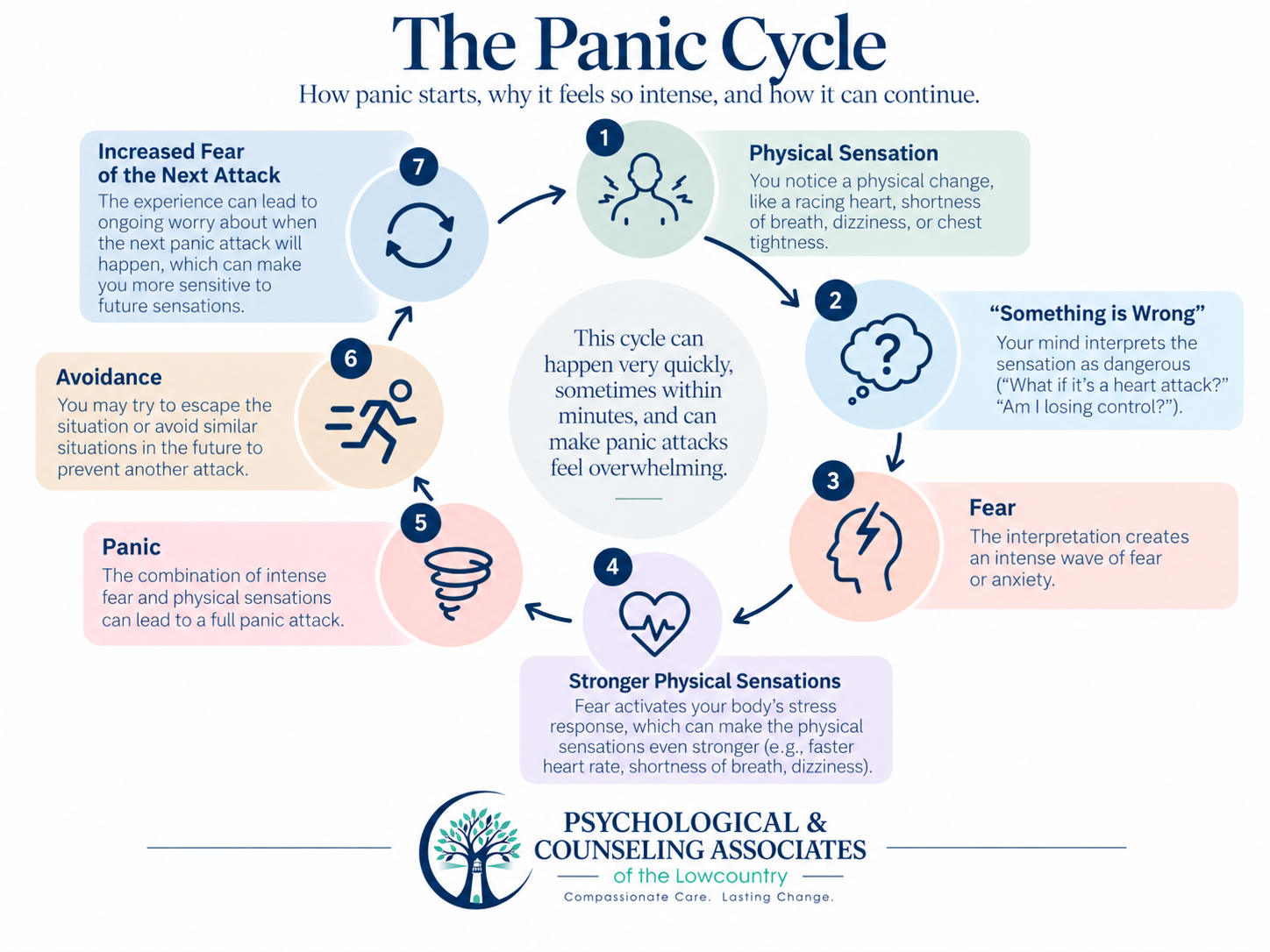
The combination of frightening thoughts and intense physical sensations can create a feedback loop: the sensations create fear, and the fear makes the sensations even stronger.
The Fear of Having Another Panic Attack
For some people, the panic attack itself lasts a relatively short time—but worrying about the next one can continue much longer.
You may begin monitoring your heartbeat, breathing, or other physical sensations. Places where you've previously experienced panic may start to feel unsafe. Driving, flying, crowded stores, restaurants, meetings, exercise, or being far from home may become increasingly uncomfortable.
You might begin avoiding situations where you worry that escaping would be difficult or help wouldn't be readily available.
Over time, the fear of another panic attack can become as disruptive as the panic attacks themselves.

Why do panic attacks happen?
Common Questions About Panic Attacks
Can a panic attack feel like a heart attack?
Yes. Panic attacks can cause chest pain or tightness, a racing or pounding heart, shortness of breath, sweating, dizziness, nausea, and a powerful sense that something is seriously wrong. Those symptoms can feel very similar to a medical emergency.
Because chest pain, breathing difficulty, fainting, and other physical symptoms can also have medical causes, new, severe, or unexplained symptoms should not automatically be assumed to be panic. When there is uncertainty, appropriate medical evaluation is important.
Why am I suddenly having panic attacks?
Sometimes there is an obvious trigger, such as significant stress, a major life change, illness, trauma, or a period of prolonged anxiety. Other times, the first panic attack seems to happen without any clear reason.
Once someone has experienced a frightening panic attack, they may also become more sensitive to normal changes in their body—such as an increased heart rate, dizziness, or changes in breathing. Worrying about those sensations can then contribute to additional panic attacks.
Therapy can help identify the patterns, triggers, thoughts, and behaviors that may be contributing to the cycle.
Can panic attacks happen for no reason?
They can appear to.
Some panic attacks are expected and occur in response to a particular situation or fear. Others are unexpected and seem to happen without an obvious trigger.
Even when a panic attack feels completely random, there may be contributing factors such as stress, physical sensations, changes in breathing, lack of sleep, caffeine, health concerns, or heightened sensitivity to bodily sensations.
One goal of therapy is to better understand what is happening rather than becoming increasingly afraid of the sensations themselves.
How long does a panic attack last?
Panic attacks typically intensify very quickly, with symptoms often reaching their strongest point within minutes.
The most intense symptoms may begin to ease relatively quickly, although some people continue to feel anxious, exhausted, shaky, or unsettled afterward. The experience can feel much longer because of how intense and frightening it is.
Fear of another attack can also continue long after the physical symptoms have passed.
Can anxiety cause chest pain?
Anxiety can contribute to chest tightness, pressure, discomfort, muscle tension, changes in breathing, and an increased awareness of your heartbeat.
However, chest pain can have many causes. New, severe, persistent, or unexplained chest pain should be evaluated medically rather than automatically attributed to anxiety.
Once medical concerns have been appropriately addressed, therapy can help with anxiety surrounding physical sensations and the fear that those sensations may signal danger.
Why do I feel like I can't breathe during a panic attack?
Panic can change the way you breathe. Some people begin breathing more quickly or shallowly without realizing it, while others become intensely focused on whether they are getting enough air.
That sensation can become frightening, which can increase fear and make breathing feel even more difficult.
Understanding the relationship between panic, breathing, and the body's stress response can help reduce the fear associated with these sensations.
Why do I feel dizzy or lightheaded during a panic attack?
Changes in breathing, increased adrenaline, muscle tension, and the body's stress response can all contribute to dizziness or lightheadedness during panic.
The sensation itself can then create additional fear—particularly if you begin worrying that you might faint or lose control.
This is another example of how physical sensations and fearful interpretations can reinforce one another during a panic attack.
Can panic attacks happen while driving?
Yes. Some people experience panic attacks while driving or become increasingly anxious about driving after having experienced panic behind the wheel.
They may begin avoiding highways, bridges, heavy traffic, long distances, or driving alone because they are afraid another panic attack will occur somewhere they cannot easily escape.
Avoidance can provide immediate relief, but over time it may strengthen the belief that driving is dangerous or impossible to tolerate.
Therapy can help address both the panic itself and the avoidance that sometimes develops around it.
What is the difference between a panic attack and panic disorder?
A panic attack is an episode of intense fear or discomfort accompanied by physical and psychological symptoms.
Panic disorder involves more than simply having experienced a panic attack. It generally includes recurrent unexpected panic attacks along with ongoing concern about having additional attacks or significant changes in behavior because of them.
A mental health professional can help determine whether your experiences are consistent with panic disorder or whether another type of anxiety may better explain what you are experiencing.
Why am I afraid of having another panic attack?
After experiencing something as intense as a panic attack, it is understandable to become highly alert for signs that another one may be starting.
You may begin monitoring your heartbeat, breathing, dizziness, or other physical sensations. Unfortunately, increased monitoring can make normal bodily sensations seem more noticeable and threatening.
This fear of future panic—sometimes called anticipatory anxiety—can become an important part of the panic cycle.
Can avoiding panic triggers make panic attacks worse?
It can.
Avoiding something that makes you anxious usually produces immediate relief. That relief can reinforce the belief that avoiding the situation prevented something dangerous from happening.
As avoidance grows, people may begin limiting where they go, how far they travel, whether they drive, where they sit in restaurants or theaters, or whether they participate in activities that raise their heart rate.
Therapy can help people gradually change these patterns without simply forcing them into situations before they are ready.
Can therapy help with panic attacks?
Yes. Psychotherapy is an established treatment for panic attacks and panic disorder.
Treatment may help you better understand the panic response, change frightening interpretations of physical sensations, reduce avoidance, become less fearful of anxiety itself, and gradually regain confidence in situations that have become difficult.
The specific approach depends on your symptoms, history, goals, and individual needs.
How do I know if I should see a therapist for panic attacks?
It may be worth talking with a therapist if panic attacks are recurring, if you spend significant time worrying about having another one, or if fear of panic is beginning to change how you live your life.
That might include avoiding driving, travel, exercise, crowds, stores, restaurants, work situations, or places where you worry it would be difficult to leave.
You don't need to wait until panic has severely restricted your life. Earlier treatment may help prevent fear and avoidance from becoming increasingly established.